


SINC: Crew & Job Tracker
4.4436.00 Reviews
App Specs
- Version
- 3.2.002
- Updated On
- License
- Free
- Downloads
- 100,000+
- Developer
- SINC
- Categories
- Business
- Platform
- Android
Screenshots
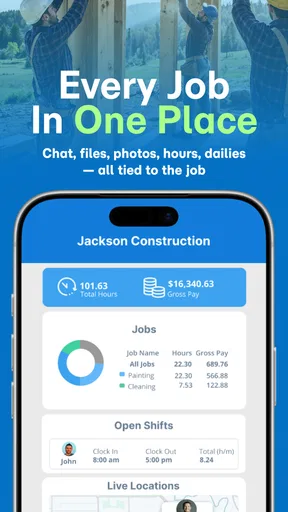
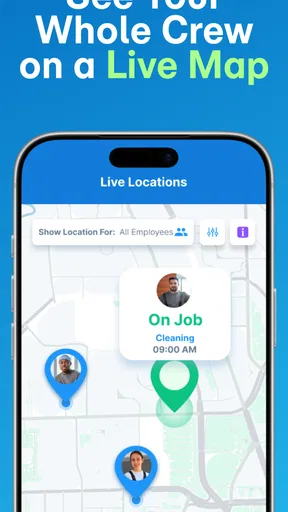
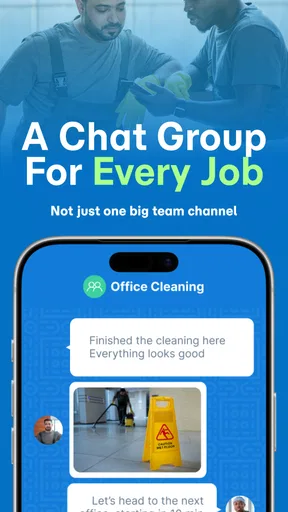
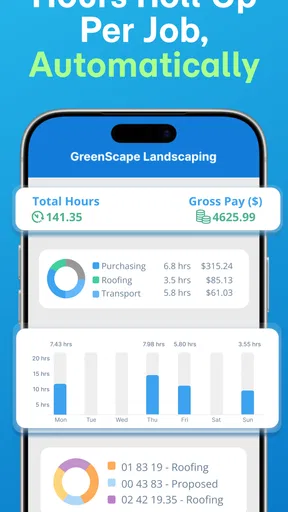
 Analysis by AppCompare
When staff hours, shift changes and job assignments live in separate notebooks or message threads, even a small team can lose time sorting out who worked where and when. I see SINC: Employee Time Clock as an attempt to bring those day-to-day details into one mobile workflow. It is a business app from SINC, and its focus is practical: help hourly teams record attendance and keep work organized without making every shift depend on a manager’s spreadsheet.
What is SINC: Employee Time Clock?
For a small business, the value of a time clock is not just the button an employee taps at the start of a shift. It is having a usable record to check when schedules change, a job runs long, or payroll preparation begins. SINC is built around that kind of routine. It is free to install, has a 4.4 average from around 958 ratings, and has passed 100,000 installs. Those figures suggest it has found an audience, though the right test for any team is whether its clock-in process fits the way that team actually works.
The app is currently at version 3.1.023, with its initial release dating to August 17, 2017. That long span gives the product a more established feel than a newly launched timekeeping tool, while the current version is the concrete point a new user can assess. I would treat the version number as a marker of the app’s present state, not as proof that every workflow has been recently redesigned. Its Teen age rating is also worth noting if a business is choosing software for a mixed-age workforce; the rating concerns the app’s store classification, not whether a particular employee can use it under workplace rules.
Getting Started
First things first, setting up SINC is a breeze. I downloaded the app from the App Store, and in just a few minutes, I was ready to roll. The interface is clean and pretty intuitive, which is a big win in my book. You don’t need to be a tech wizard to figure this one out. I simply added my team members, set their roles, and we were off to the races.
For an owner or supervisor, the useful next step is to decide how the team will use the clock before inviting everyone into the routine. Agree on when people should clock in, how to record a shift that spans different jobs, and whom to contact if a punch is missed. That small bit of preparation can prevent the app from becoming a new place where old ambiguities collect. A time record is only as consistent as the habits around it, so I would make the process easy to explain at a shift briefing rather than assuming every employee will discover the same workflow on their own.
Features That Stand Out
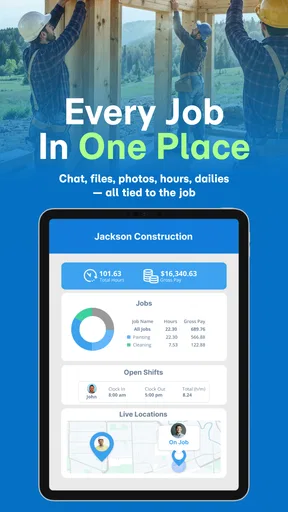
In everyday terms, the appeal is that attendance, shift information and job context can sit closer together than they would in a paper log or a collection of texts. When a manager reviews a week, the point is not merely to see a total; it is to have a clearer trail of who was scheduled, who recorded time, and what work the time related to. That can make follow-up less awkward, because a question about a shift can start with a shared record instead of someone’s memory.
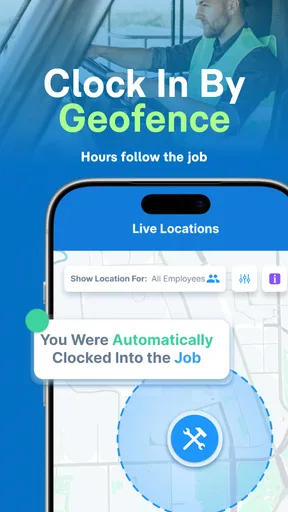
- Time Tracking: Employees can clock in and out with a single tap. The app records their hours and even tracks their location, ensuring they’re where they say they are. No more guesswork!
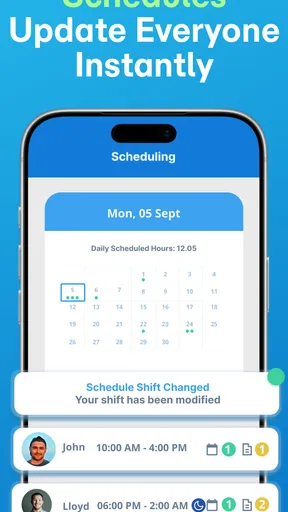
- Job and Task Management: Assign tasks and jobs to team members directly through the app. You can keep tabs on what’s being done and who’s doing what.
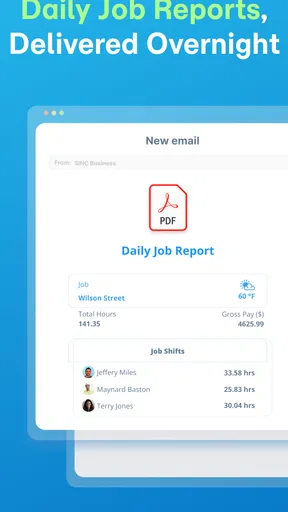
- Reports and Analytics: Generate detailed reports on hours worked, overtime, and other key metrics. Great for payroll and performance reviews.
- Communication: Built-in messaging lets you communicate with your team without leaving the app. Handy, right?
A practical way to judge those tools is to follow one shift from start to finish. A crew member arrives at a site, clocks in, spends part of the day on one job, then moves to another assignment before clocking out. The manager can use job context and time records to check how the day was divided, rather than trying to reconstruct it later from scattered notes. If the team has a missed punch or an unexpected change, the record also gives both sides a concrete starting point for sorting it out. I would still make the correction process clear in advance; relying on an app does not remove the need for a fair, consistent policy.
Worth Reading Before You Choose

Flipboard Shows What News Apps Must Do Beyond the Feed

Switching to Android Auto Means Rethinking Your Driving Routine

Google Calendar Makes a Crowded Week Easier to Manage

Ludo King Makes the Most of the Minutes Between Plans

Baby Panda World Brings Quick Play to Modern Phones, but Its Game Library Feels Busy

ESPN’s Live Game View Makes Following Close Games Easier
How It Fits a Working Team
SINC is most compelling for a business where people move between shifts or jobs and a supervisor needs a shared view of attendance. A small contractor coordinating staff across work sites, for example, may care about the job attached to a block of hours as much as the total time itself. A shop manager may value an easier way to check attendance patterns across the week. In both cases, the benefit comes from bringing a few related tasks into one place, not from replacing sound scheduling decisions.
There is also a useful trade-off in putting timekeeping on employees’ phones: it can make clocking in straightforward, but a team needs a clear expectation about which device and process count as the official record. If employees share devices, have limited access to smartphones, or do not want work tools on a personal phone, a dedicated terminal or manager-run clock may be a better fit. Before rolling it out, I would ask staff to try a normal shift and a changed shift, then see whether both are easy to record without a supervisor stepping in.
Compared with a paper timesheet, a mobile clock can reduce the end-of-week task of deciphering handwriting and chasing missing entries. Compared with a basic spreadsheet, it may keep attendance and job details nearer to the moment they happen. But a spreadsheet can remain the better choice for a very small team with stable hours and an existing payroll routine, especially if it needs custom calculations that the team already understands. SINC makes more sense when the repeated work of collecting and checking punches is itself becoming a burden.
Why I Think It’s a Winner
So, what makes SINC stand out in the crowded field of time management apps? For starters, it’s simplicity. I found it incredibly easy to navigate, and that’s a big plus. It doesn’t hurt that the design is sleek and modern, making the overall experience quite pleasant.
Its broader appeal is the connection between timekeeping and the work being done. A plain clock can tell a business when someone arrived and left; a job-oriented workflow can also help a manager understand where hours went. That distinction matters when assignments change during the day or when a team has several kinds of work to coordinate. I would not assume that every company needs this extra context, but for a supervisor who regularly asks “which job was that shift for?”, keeping the details closer together can be genuinely useful.
Another thing I appreciate is the flexibility. Whether you’re in construction, retail, or any other industry, the app seems adaptable to different needs. Plus, it’s available on both Android and iOS, so no one’s left out in the cold.
That flexibility still depends on how a workplace is organized. A business with a few recurring roles can likely establish a straightforward routine, while a team with frequent schedule changes may need more care when setting expectations and keeping assignments current. My tip would be to start with the most common shift pattern and only add complexity once employees and managers are comfortable with the basics. Trying to model every exception on day one can make a simple clock feel harder than it needs to be.
Limits, Cost and Everyday Friction
No app is perfect, and SINC is no exception. While it offers a free version, some advanced features require a subscription. Depending on your budget, this might be a consideration. Also, while the app is generally user-friendly, I noticed a slight learning curve for those who aren’t tech-savvy, particularly when it comes to setting up complex schedules.
The price structure deserves a little attention before a team commits. The app is free to download, while in-app purchases range from $8.99 to $394.99 per item. That wide spread means I would check the exact plan or purchase that matches the business’s needs instead of treating “free” as a promise that every useful workflow is included at no cost. For an owner, the sensible comparison is the expense of the relevant option against the hours currently spent correcting timesheets and organizing shifts, not against the headline price alone.
Another point to mention is the need for a stable internet connection for some of the features, like location tracking. It’s something to keep in mind if you’re often in areas with spotty coverage.
That limitation is especially relevant for teams working at changing or remote locations. I would test the actual clock-in routine where employees will use it, rather than assuming a process that works at the office will be equally smooth on every site. If connectivity is unreliable, managers should agree on what staff do when a punch cannot be recorded as expected and how they report it afterward. A backup method is not a sign that the app has failed; it is a sensible safeguard for payroll records.
Location-related tracking also calls for thoughtful communication. A business should explain what it expects the feature to do, when it matters to the work, and how staff can raise concerns. Even when a tool is intended to confirm attendance, employees may reasonably want clarity about how location fits into the workplace’s policy. I would not introduce that part of the workflow without explaining it plainly and checking that it is appropriate for the team and the jobs involved.
Who Should Choose It—and Who May Prefer Something Else
I would consider SINC if I ran a small or midsize hourly team where shifts and jobs need regular coordination, and where managers currently spend too much time gathering hours from different sources. It is also a reasonable option for a business that wants employees to record their own attendance rather than asking a supervisor to enter every shift later. The strongest case is a team that can benefit from job context and a more organized record, and that is comfortable using phones as part of its work routine.
I would look elsewhere if the main need is complex workforce planning, highly customized payroll calculations, or a formal clock-in station for staff who should not use personal devices. A business that already has a dependable scheduling and payroll system may gain little from adding another app unless SINC clearly closes a gap in its current process. The decision is not “mobile app versus no organization”; it is whether this particular blend of time, shifts and job tracking is better than the tools the team already knows.
Before choosing, I would have one manager and a few employees walk through a realistic week: a normal shift, a job change, an absent coworker, and a missed punch. That small trial can expose practical questions early. Does everyone understand which job to select? Can a supervisor review a discrepancy without turning it into a long back-and-forth? Are the reports useful for the way payroll is prepared? Those answers are more valuable than a feature checklist because they reveal whether the app fits the actual rhythm of the workplace.
What to Watch as You Use It
For existing users, the current version provides a clear reference point when deciding whether the app still suits their daily routine. If a team has used SINC for a while, I would periodically review whether staff are recording time consistently and whether job assignments still reflect how work is organized. That is a practical check on the system’s usefulness, not a claim that a specific new feature has arrived. The initial release was in 2017, and version 3.1.023 is the current version to look at when installing or updating; expectations about future changes should remain expectations until they are actually available.
For a new user, the questions worth watching are concrete: does the clock-in routine remain clear when a shift changes, can the team handle weak connectivity without losing track of a workday, and do the paid options match the value the business will get? The app has 437 reviews alongside its broader rating history, but a rating cannot tell you whether its workflow matches your staff’s habits. I would use feedback as background, then base the decision on a short, realistic test with the people who will clock in and manage the records.
Final Thoughts
In conclusion, SINC: Employee Time Clock is a solid choice for businesses looking to simplify their time management processes. It’s easy to use, packed with features, and adaptable to various industries. While it has its quirks, the overall functionality and ease of use make it a worthwhile investment for many businesses.
If you’re tired of juggling spreadsheets and paper timesheets, give SINC a try. Trust me, it could be the game-changer you’ve been looking for. Happy clocking!
Pros
- Intuitive user interface for easy navigation.
- Real-time syncing across multiple devices.
- Customizable settings for different industries.
- Accurate time tracking with GPS features.
- Seamless integration with payroll systems.
Cons
- Limited offline functionality.
- Subscription required for premium features.
- Occasional sync delays reported by users.
- Initial setup can be time-consuming.
- Customer support response times vary.
FAQs for SINC: Crew & Job Tracker
What is SINC: Employee Time Clock and how does it work?
SINC: Employee Time Clock is a mobile app designed to streamline employee time tracking and management. It allows employees to clock in and out using their smartphones, while managers can monitor timesheets in real-time. The app also includes features for job tracking and location verification, making it a comprehensive tool for workforce management.
Is SINC: Employee Time Clock suitable for all types of businesses?
Yes, SINC is versatile and can be used by businesses of various sizes across different industries. Whether you run a small local business or a large enterprise, the app’s customizable features allow you to tailor it to meet your specific time tracking and job management needs.
Does SINC: Employee Time Clock require an internet connection to function?
While SINC works best with an internet connection for real-time updates and data syncing, it also offers offline functionality. Employees can clock in and out without a connection, and their data will sync automatically once they reconnect to the internet, ensuring seamless operation.
How secure is the data stored in SINC: Employee Time Clock?
SINC prioritizes user data security by employing encryption and secure data storage practices. All information is stored on secure servers, and the app complies with data protection regulations to safeguard sensitive information, giving users peace of mind regarding their data privacy.
Can SINC: Employee Time Clock integrate with payroll systems?
Yes, SINC offers integration with popular payroll systems, allowing for seamless transfer of timesheet data to payroll processing. This feature helps eliminate manual entry errors and simplifies the payroll process, saving time and reducing administrative burdens for businesses.


